


Modular Chassis
One backbone. Built for fit, balance and control.
The Night Fury modular chassis system is built around one central idea: the backbone matters. When the foundation is right, the rest of the platform can be shaped with intent. Fit can change. Balance can shift. Weight can be added or reduced. The system can be built for hunting, sport shooting, precision work, or shared use across more than one shooter — without abandoning the logic of the platform each time the role changes.
What a Modular Chassis System Changes
A modular rifle chassis system should do more than collect parts around a rifle. It should allow meaningful changes to the way the platform fits, carries, settles and behaves. Night Fury chassis systems are built to change what matters: rear-end fit, front-end stability, overall balance, available support, and how the rifle moves between field use and more deliberate precision work. The point is not novelty. It is a system that can be configured with discipline.
The Night Fury Chassis Backbone
At the centre of the Night Fury chassis system is the inlay — the structural core around which the platform is built. From there, the chassis can be configured through buttstock, grip, forend, over-barrel and optional weight components to create a system that better suits the intended role. The chassis backbone is simple in principle and powerful in use: the foundation remains while the fit, balance and purpose can evolve around it.
Core Chassis Components
_PNG.png)
The Night Fury Chassis Backbone
At the centre of the Night Fury chassis system is the inlay — the structural core around which the platform is built. From there, the chassis can be configured through buttstock, grip, forend, over-barrel and optional weight components to create a system that better suits the intended role. The chassis backbone is simple in principle and powerful in use: the foundation remains while the fit, balance and purpose can evolve around it.
Buttstocks
The buttstock shapes how the system meets the body. It affects fit, rear balance, shoulder contact and how steady the platform feels when the shot breaks. Night Fury offers three buttstock directions within the chassis family: Junior, Light, and Elite. A lighter buttstock keeps the system faster and easier to carry. A heavier or more adjustable buttstock brings more stability, finer fit and a more settled feel behind the rifle. The Junior Buttstock brings the same Night Fury backbone into a shorter, lighter form for younger shooters — fully interchangeable with every other Night Fury part, so it can grow as they do.
Centre Inlay
The centre inlay is the structural heart of the chassis — the piece that brings the system together. It connects the action to the rest of the platform and creates the fixed interface around which the other components can change. This is where modularity becomes real: the backbone stays, while the fit, balance and purpose can evolve around it.
Grips
Grip options shape how the hand meets the rifle and how naturally control is maintained. Night Fury offers both plastic and aluminium grip options in the chassis system. The right grip changes more than feel. It changes how the hand settles and how confidently the shooter can stay connected to the platform.
Forends
The forend shapes what happens out front. It affects front-end weight, how the system carries in the hand, how it sits on support, and how steady it feels in position. Night Fury offers Light, Target and Elite forend options. A lighter forend keeps the build responsive and easier to manage in the veld. A heavier or longer forend adds stability, gives the front end more planted control, and better suits supported shooting, longer distances and shooters who want a calmer hold.
Over-Barrels
The over-barrel section changes how much weight sits forward and how the system balances through the hands. Less weight keeps the rifle quicker, lighter and easier to move with. More forward mass can settle the muzzle, improve stability and give the system a more controlled feel from supported positions. Night Fury offers both Short and Long over-barrel options within the chassis system.
Optional Extras
The system can be refined further through optional extras including buttstock weights, quick-release knob sets, side weights, bottom weights, grip weight, belt studs, bag rider, folding stock adaptor and colour options. These are the final adjustments that fine-tune how the system behaves in the hands.
Available Across 86 Different Actions
Every Night Fury chassis is built for the specific action it is meant to serve. With support for 86 different actions, Night Fury modular chassis systems make that backbone available across a wide range of rifles used in ethical hunting and sport shooting. The platform changes to suit what you already own, so you do not have to begin again.
Thirteen System Configurations
The Night Fury chassis range includes thirteen systems. Systems 1 to 10 form the core modular range, moving through different combinations of buttstock, inlay, grip, forend and over-barrel components. The range is then extended by the Timberline, the CFX, and the Junior chassis, each serving a different kind of shooter and application while remaining part of the same broader chassis philosophy.
How the Range Moves
Systems 1 to 10 show the main progression through the Night Fury modular chassis range: from lighter carry-focused builds to heavier, more stability-focused configurations. Beyond that core range, the Timberline adds a warmer, more traditional hunter expression, the CFX introduces a lighter carbon-fibre direction, and the Junior chassis extends the platform toward younger and smaller-framed shooters. Together, the thirteen-system range shows that Night Fury modularity is not one fixed shape, but a disciplined backbone expressed across different needs.
Why Modularity Matters Here
A chassis platform becomes more valuable when it can be built around the shooter, the rifle action, and the intended application without losing itself in the process. The Night Fury modular chassis system allows the platform to move between lighter and heavier builds, different support needs, and different bodies with more continuity over time. It is not about collecting options for their own sake. It is about building a rifle system that can stay relevant longer.
Built for Hunting and Sport Shooting
Night Fury modular chassis systems are developed for ethical hunting and regulated sport shooting, with the aim of improving fit, balance, repeatability and control. A South African modular rifle chassis should do more than look the part. It should carry properly, hold properly, and allow refinement without compromising the backbone of the system.
One backbone - Multiple forms
That is the point of a modular chassis. The system shifts with the role — from lighter carry to more planted control, from youth fit to long-range intent.
Light, quick and field-minded. The simplest expression of the modular mindset: Light buttstock, Light fore-end, nothing unnecessary. It is built for movement, long days in the veld and the kind of shooter who wants the system to disappear into the body rather than dominate it. The name fits because Mirage feels fast, elusive and instinctive.

HUNT
Adaptable, capable, impossible to pin down to one role. With the Target fore-end, it sits perfectly between hunting and long-range, between lighter and more planted. Invader already has the right weight and mythology. It feels like the first system in the range that truly announces: one backbone, many configurations.

MID RANGE
Smooth, balanced, instinctive. The one that shoulders naturally and simply feels right. The Short Over Barrel gives it a little more control and presence without losing the easy, fluid feel that makes Jazz the perfect name. It is elegant, but not soft. Refined, but still dangerous.
.png)
MID RANGE
Technical, precise and built to settle properly on support. Ratchet is the first system in the range that clearly leans into bipods, bags and more deliberate field positions. The Elite forend gives the front end a broader, more stable interface, making the rifle feel more planted when precision matters. Still light enough for the veld, but no longer built around speed alone.

PRECISION
HUNT
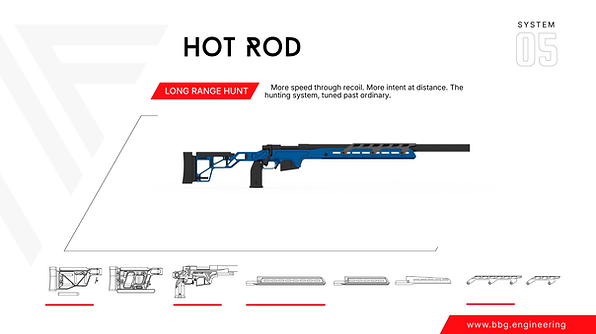
Sharp, aggressive and more committed at distance. Hot Rod pushes the hunting platform further forward with the Elite forend and Long Over Barrel, giving the rifle more authority at the front and a faster, more controlled return through recoil. Built for shooters who want more bite, more urgency and a system that feels alive in the hands when distance starts asking harder questions.
LONG RANGE
HUNT
Drift keeps the hunt light, but makes the fit more serious. With the Elite buttstock and Light forend, it stays responsive in the veld while giving the shooter more control at the rear — better shoulder contact, better cheek position, better adjustment. Carry-first, but no longer basic.

REFINED
HUNT
Where to Go Next
Once the backbone is understood, the next step is to explore the system through fitment, use and configuration.
Frequently Asked Questions About Modular Chassis
What is a modular chassis system?
A modular chassis system is a platform that allows meaningful changes to fit, balance, support and overall configuration without replacing the entire foundation.
What parts make up the Night Fury modular chassis system?
The Night Fury chassis system includes a centre inlay, buttstock, grip, forend, over-barrel options and optional extras such as weights, studs and adaptors.
Does one Night Fury chassis fit every rifle action?
No. Each Night Fury chassis is built for the specific action it is meant to support. The strength of the range lies in fitment across 86 different actions, not one-size-fits-all compromise.
How many chassis systems are in the Night Fury range?
The Night Fury chassis range includes 13 systems: Systems 1 to 10, plus the Timberline, the CFX, and the Junior chassis.
What changes between the different chassis systems?
The systems differ through the combination of buttstock, forend and over-barrel components, which changes fit, weight, balance and intended application across the range.
What should I compare when looking at modular chassis systems?
Look at what the platform itself allows: fitment for the correct action, meaningful changes to balance and support, range breadth, long-term usefulness, and whether the system can be configured with purpose rather than surface-level variation.